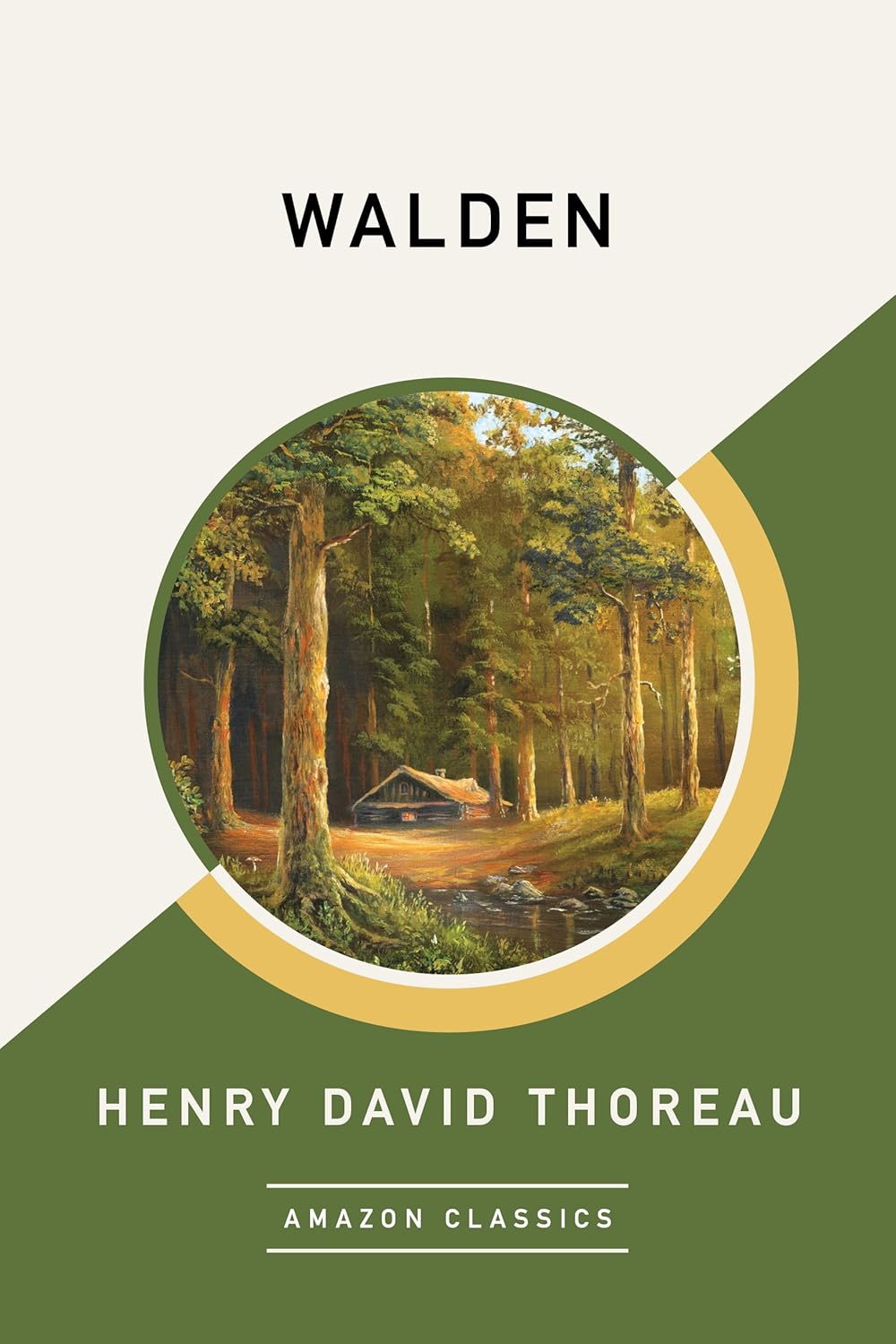

Henry David Thoreau’s Walden, a seminal work in American literature and philosophy, encapsulates the author’s experiment in simple living and deep communion with nature. Published in 1854, Walden is more than a memoir; it is a philosophical treatise that advocates for self-sufficiency, mindfulness, and harmony with the natural environment. Thoreau’s reflections on life in the woods serve as a timeless reminder of the value of simplicity and the importance of reconnecting with the natural world amidst the complexities of modern life.
Thoreau retreated from the bustling society of Concord, Massachusetts, to live in a small cabin near Walden Pond for over two years. His purpose was to strip life down to its essentials and observe the natural rhythms of the environment. Thoreau believed that by simplifying life and reducing material pursuits, individuals could attain spiritual clarity and genuine happiness. His experiment was both a personal quest and a critique of contemporary society’s obsession with progress, materialism, and superficial success.
At the core of Walden lies the theme of simplicity. Thoreau advocates for a life where one minimizes possessions and distractions to focus on what truly matters—personal growth, understanding nature, and spiritual fulfillment. His emphasis on self-reliance is evident in his practices of growing his own food, building his shelter, and relying on his own efforts rather than societal institutions. These principles encourage readers to question the necessity of consumerism and to seek fulfillment in simplicity and authenticity.
Thoreau’s reflections emphasize the importance of observing and respecting nature’s cycles. Through detailed descriptions of the seasons, flora, fauna, and natural phenomena, he demonstrates that nature is a source of inspiration, wisdom, and solace. He advocates for a lifestyle that aligns with natural laws, suggesting that such harmony leads to inner peace and a deeper understanding of life. His mindfulness in appreciating the small details of nature reveals a spiritual connection that transcends superficial appearances.
While Walden advocates for solitude and simplicity, Thoreau also recognizes the value of community and civic responsibility. His critiques of materialism and complacency serve as calls to action for individuals to live intentionally and ethically. The work encourages self-examination, mindfulness, and the pursuit of truth, urging readers to find their own path in harmony with nature and their inner selves.
Walden remains a powerful influence on environmental philosophy, transcendentalism, and the American literary tradition. Its messages about simplicity, sustainability, and authenticity resonate in today’s world, where technological advances and consumer culture often overshadow the natural environment. Thoreau’s experiment in living deliberately challenges us to reflect on our own lifestyles and consider how we can cultivate a more meaningful, environmentally conscious existence.
Henry David Thoreau’s Walden is a profound meditation on life in harmony with nature and the pursuit of simplicity. Through his reflections, Thoreau invites us to reconsider our values, embrace a more mindful existence, and recognize the intrinsic beauty and wisdom of the natural world. In an era marked by rapid change and environmental challenges, Walden offers timeless insights into living deliberately and cultivating a life of genuine fulfillment and ecological harmony.