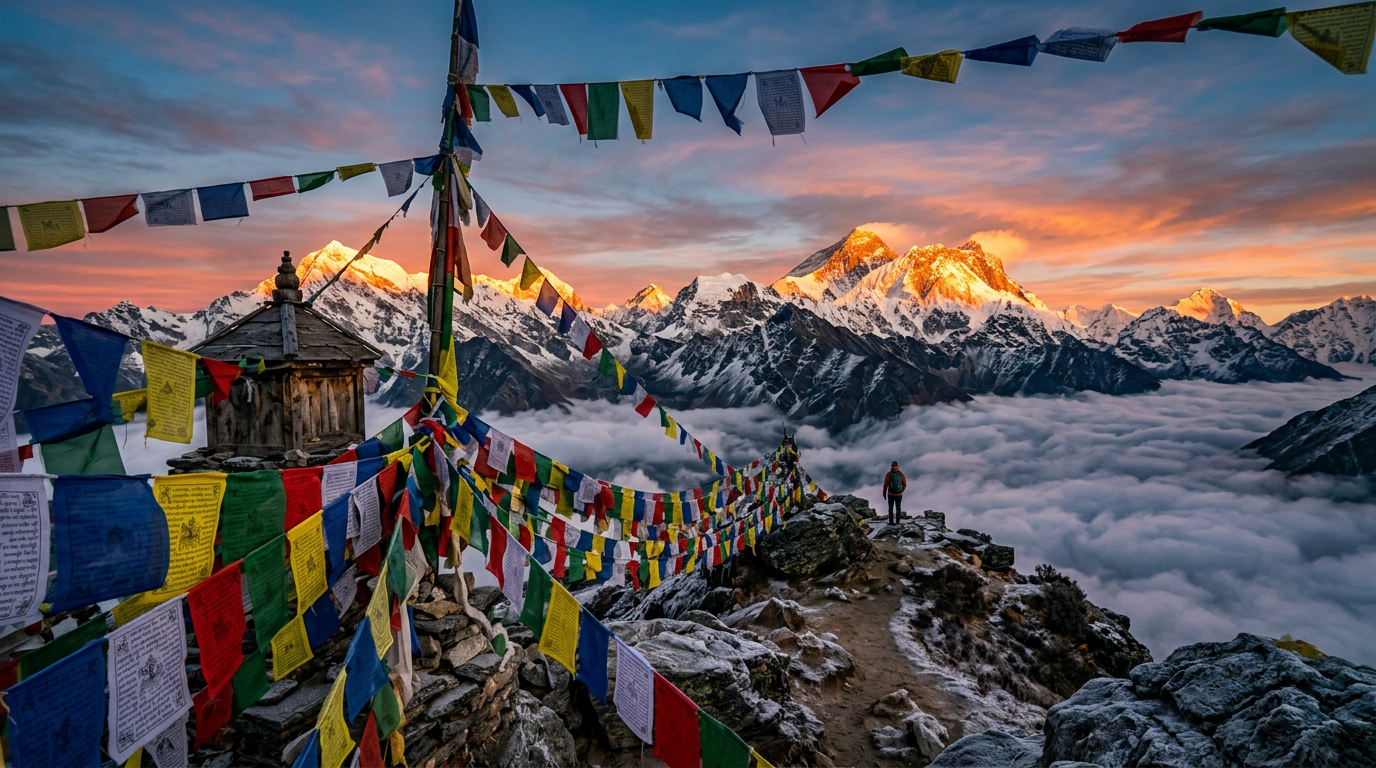
The Himalayas, towering majestically across Asia, are not just the tallest mountain range on Earth but also a region rich in history, spirituality, and cultural mysteries. These mountains have long been revered as sacred sites, centers of ancient trade, and hubs of exploration. As modern travelers flock to these breathtaking landscapes, many are unaware of the intriguing stories, lesser-known facts, and cultural significance that make the Himalayas even more fascinating. This explores the major Himalayan tourist havens, their historical and spiritual importance, and some hidden facts every traveler should know.

Nepal: The Sacred Land and Mountaineering Epicenter
Nepal’s Himalayas are globally renowned for their towering peaks and spiritual heritage. The Sherpa community’s ancestors are believed to have migrated from Tibet over a thousand years ago, bringing with them a tradition of mountaineering that has helped shape Everest expeditions.
Unknown Fact: The first recorded ascent of Mount Everest was in 1953 by Sir Edmund Hillary and Tenzing Norgay, but what many don’t know is that Tenzing Norgay’s ancestors were Sherpas who served as guides for centuries, and his family’s deep spiritual connection to Everest believed it to be a sacred mountain. Additionally, the Sherpa community has a rich oral tradition claiming that Mount Everest (known locally as Sagarmatha) is the home of the gods, and climbers often leave offerings and prayer flags to seek blessings before their ascent.
India: A Land of Ancient Spirituality and Hidden Treasures
India’s Himalayas are an epicenter of spiritual traditions. The region has served as a refuge for sages and monks who sought enlightenment in the mountains’ serenity. The story of the Himalayas in Indian mythology is woven into epics like the Ramayana and Mahabharata, where gods and heroes are said to have visited or ascended these peaks.
Unknown Fact: One lesser-known fact is that the Himalayas in India are home to “hidden caves” believed to be meditation sites of ancient sages. For example, the Cave of Swami Sivananda in Uttarakhand is still a place of pilgrimage, but it remains relatively unknown to international tourists. Also, the Himalayan rivers in India, such as the Ganges and Yamuna, are considered divine and are believed to have descended from the mountains to purify the soul—a belief that has inspired countless pilgrims for millennia.

Bhutan: The Kingdom of Mystical Monasteries and Sacred Sites
Bhutan’s history is deeply intertwined with Buddhism. The story of the Tiger’s Nest Monastery (Paro Taktsang) is a fascinating tale of spiritual legend. According to Bhutanese lore, Guru Padmasambhava meditated at this site over a century ago, establishing it as a spiritual anchor of the country.
Unknown Fact: An intriguing lesser-known fact is that Bhutan’s mountains are believed to be alive with spiritual energy. Locals often speak of “mountain guardians” or spirits that protect the land. Many of these mountains are considered sacred, and climbing them is often avoided unless specifically permitted by spiritual authorities. The country’s policy of “High Value, Low Impact” tourism reflects its effort to preserve these sacred sites and respect local beliefs.

Tibet: The Heart of Tibetan Buddhism and Hidden Mysteries
While Tibet is politically separate, its Himalayan landscape is a spiritual epicenter. The Potala Palace, an architectural marvel, was once the winter residence of the Dalai Lama and symbolizes Tibetan sovereignty and spiritual authority.
Unknown Fact: Few travelers know that Tibet contains mysterious underground caves and hidden monasteries that are not open to tourists but are considered to house sacred relics and teachings. The legendary “Yamdrok Lake,” often called the “Sacred Lake,” is believed by Tibetans to be a dragon’s palace and is considered a powerful spiritual site, yet many tourists are unaware of its mythic status.
Pakistan and China: Ancient Passages and Sacred Peaks
In Pakistan’s Gilgit-Baltistan, the ancient Silk Road passed through, linking distant civilizations. The region’s peaks, like Nanga Parbat, are shrouded in legend.
Unknown Fact: Nanga Parbat is known as the “Killer Mountain” due to its deadly history of climber fatalities, but it is also believed by local Balti people to be the home of spirits who govern the mountain’s wrath. Meanwhile, Mount Kailash in Tibet is believed to be the cosmic axis connecting heaven and earth, and circumambulating it is considered a spiritual journey that washes away sins—an act many travelers aspire to undertake, yet few are aware of its profound spiritual significance.
Final Thoughts: Hidden Facts Every Traveler Should Know
Sacred Offerings: Many Himalayan sites, especially in Nepal, Bhutan, and Tibet, see pilgrims leaving offerings of prayer flags, incense, and small gifts, which are believed to carry prayers to the gods.
Cultural Preservation: Many sacred sites are protected by local communities, and climbing or visiting certain mountains requires permission or spiritual approval—a reminder of the mountains’ spiritual significance.
Environmental Impact: The sacredness attached to these mountains also emphasizes the importance of environmental preservation. Many local legends describe mountains as living entities, urging respect and care for the natural environment.

Conclusion
The Himalayas are much more than towering peaks and scenic vistas; they are repositories of ancient history, spiritual wisdom, and cultural mysteries. Beyond their breathtaking beauty, these mountains harbor stories, legends, and facts that deepen our understanding and appreciation of their significance. For travelers, knowing these lesser-known facts enriches their journey, fostering respect and reverence for the sacred, historical, and natural treasures of the Himalayan region.





Leave a Reply