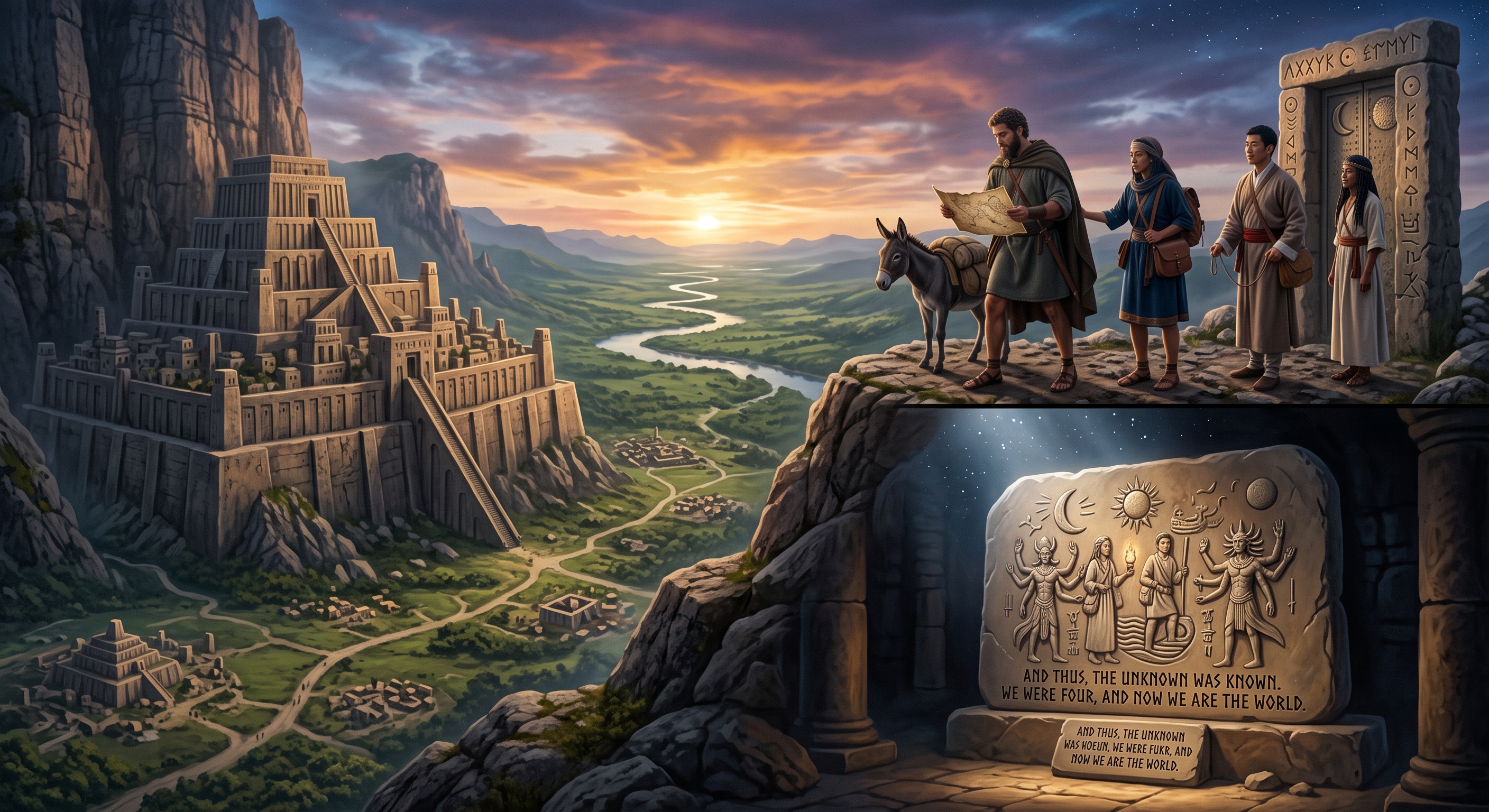
Long before satellite imagery, compasses, and global navigation systems, humanity’s vision of the globe was shaped by raw courage, maritime skill, and an insatiable curiosity about what lay beyond the horizon. The history of exploration is frequently dominated by the European “Age of Discovery” in the 15th and 16th centuries. However, thousands of years earlier, ancient voyagers embarked on journeys into uncharted territories that were just as perilous, transformative, and foundational to human connection. The expeditions of Queen Hatshepsut’s fleet, Himilco the Navigator, Pytheas of Massalia, and Zhang Qian demonstrate that global curiosity is an ancient human imperative, bridging disparate cultures and expanding the boundaries of known reality.

First and foremost, ancient exploration served as a powerful engine for trade and diplomatic connection across vast distances. Queen Hatshepsut’s famous voyage to the semi-mythical Land of Punt (c. 1493 BCE) exemplifies how early expeditions sought to secure valuable goods while documenting alien landscapes and cultures. By returning to Egypt with living myrrh trees, gold, exotic animals, and detailed accounts of Punt’s stilt-built architecture, the expedition transformed a legendary land into a tangible partner in international trade. Centuries later, in the late 2nd century BCE, the Han dynasty envoy Zhang Qian journeyed westward into Central Asia. Captured twice and held prisoner for over a decade, Zhang Qian’s resilience allowed him to gather vital intelligence on the sophisticated civilizations of Fergana, Sogdiana, and Bactria. His reports ultimately established the network of routes that became the Silk Road, linking Eastern and Western Eurasia in an unprecedented web of economic and cultural exchange.

Beyond commercial ambition, early explorers challenged the philosophical and geographical paradigms of their time. When the Greek navigator Pytheas of Massalia (c. 325 BCE) ventured past the Strait of Gibraltar into the North Atlantic, he reached regions entirely alien to Mediterranean experience. Pytheas documented the circumnavigation of Great Britain, the polar ice of the Arctic, and the phenomenon of the midnight sun near the mysterious island of Thule. Yet, his accurate descriptions were so outside the framework of contemporary Greek knowledge that prominent scholars like Strabo dismissed him as a fabricator. This skepticism highlights a recurring theme in the history of discovery: true exploration often yields truths so radical that they resist immediate belief by those who stay behind.
Similarly, Carthaginian navigator Himilco (c. 5th Century BCE) braved the dangerous swells, sea fog, and calm stretches of the northern Atlantic coast to map the tin-rich regions of modern-day France and Great Britain. In doing so, Himilco demonstrated how early maritime powers systematically pushed past comfortable shores to secure the raw materials necessary for technological progress—in this case, tin to produce bronze—while laying down navigation paths for future generations.

The journeys of Hatshepsut, Himilco, Pytheas, and Zhang Qian remind us that the human urge to explore is neither modern nor region-specific. These early voyagers crossed frozen seas, scorching deserts, and uncharted ocean currents, bringing back knowledge that expanded the human imagination. Their legacies prove that the true spirit of discovery lies not merely in reaching a destination, but in expanding the boundaries of what a civilization believes is possible.







Leave a Reply