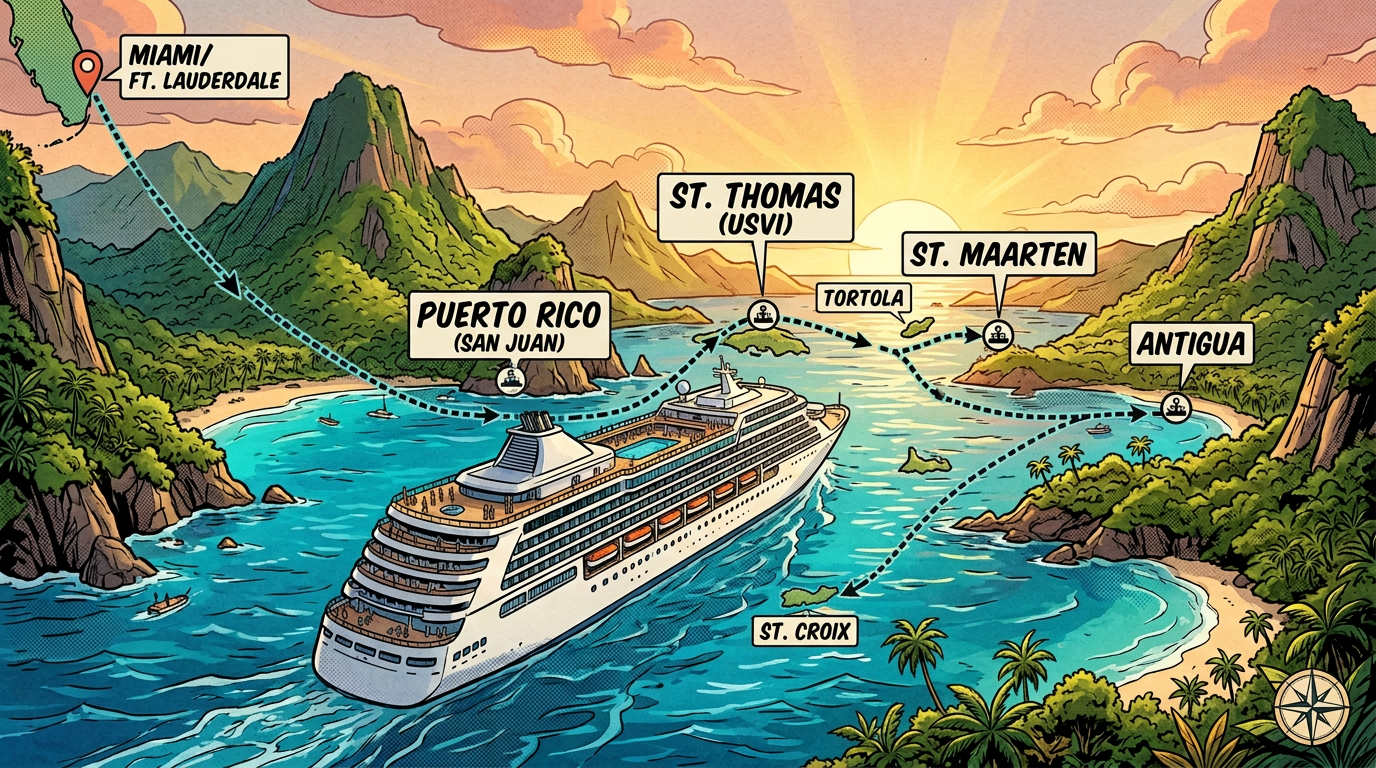

Choosing between an Eastern Caribbean and Western Caribbean cruise involves considering your family’s preferences, activity levels, and travel style. Both routes promise warm turquoise waters, tropical weather, and stops at private islands, but they differ significantly in their overall vibe, excursions, and the pacing of the trip. Understanding these differences can help you select the itinerary that best suits your family’s personality and vacation goals.
Eastern Caribbean: The Laid-Back Beach & Scenic Option
The Eastern Caribbean route is ideal for families seeking relaxation, scenic views, and a leisurely pace. It focuses on small island-hopping destinations in the Leeward and Virgin Islands, such as St. Thomas, St. Maarten, Tortola, and San Juan. The experience here is characterized by an easygoing rhythm centered around calm beaches, picturesque harbors, and colonial port towns. Port days are typically relaxed, with short taxi rides to beaches like Magens Bay or Great Bay, which are perfect for young children due to their shallow, tranquil waters.

The terrain features volcanic islands with lush hills and white-sand coves, creating stunning scenery without the need for strenuous activities. This route is especially suitable for multi-generational groups, including toddlers, grandparents, or families who prefer low-stress days, scenic island views, and simple planning. Cultural influences from Dutch, French, British, and Caribbean traditions add to the charm, providing opportunities for sightseeing and shopping without the rush.
Western Caribbean: The Eco-Adventure & Exploration Option
In contrast, the Western Caribbean offers a more action-packed, adventure-oriented experience. It includes destinations along the coast of Mexico, Central America, and the Greater Antilles, such as Cozumel, Grand Cayman, Jamaica, and Roatán. The itinerary emphasizes outdoor activities, wildlife encounters, and historic exploration. Ports are often close to natural and cultural attractions, allowing families to engage in memorable excursions like climbing Dunn’s River Falls, cave tubing in Belize, or swimming with stingrays at Stingray City.

This route appeals to active families with elementary-age children, tweens, and teens who thrive on structured, high-energy activities. The terrain features coastal reefs, dense jungles, and ancient Mayan ruins, offering a diverse mix of adventure and history. The shorter transit times from departure ports like Miami or Galveston make it convenient for families eager to maximize their time exploring rather than relaxing on the beach.
Which Route Fits Your Family?
The decision ultimately depends on your family’s personality and vacation style. Opt for the Eastern Caribbean if you desire a classic, postcard-perfect beach vacation with minimal planning, calm waters, and a slow-paced, scenic experience. It’s perfect for families looking to unwind, enjoy gentle beaches, and immerse themselves in diverse but relaxed island cultures.
Choose the Western Caribbean if your family prefers an active, adventure-filled holiday. If you enjoy zip-lining through jungles, snorkeling vibrant reefs, exploring ancient ruins, and engaging in outdoor sports, this route offers a dynamic and exhilarating experience.

In conclusion, both routes guarantee warm waters and beautiful islands, but your choice should reflect whether your family seeks a tranquil retreat or an energetic exploration. By considering your preferred pace, activity level, and the personalities of your family members, you can select the Caribbean cruise that will create lasting memories tailored to your vacation desires.







Leave a Reply