

We live in a culture obsessed with movement. From the notifications on our phones to the constant pressure to optimize our productivity, travel, and milestones, we are conditioned to believe that a life well-lived is one measured by stamps in a passport, summits reached, and horizons crossed. We applaud the departures, the sudden leaps of faith, and the bold adventures that take us far from home.
But what about the journeys that never leave the station?
Most of us carry a collection of unlived itineraries. They hide in desk drawers, digital bookmarks, or the quiet corners of our minds: the train ticket we didn’t book, the city we had to cancel, the career pivot we stepped back from, or the path we walked away from because life asked us to stay. At first glance, these unridden roads can feel like monuments to missed opportunities—ghost tracks of what might have been.
Yet, there is a profound, quiet inspiration to be found in the travel not taken.
The Geography of the Mind
When a physical journey is canceled or postponed, our imagination steps in to fill the silence. Without the friction of airports, delays, and jet lag, our internal landscapes expand. We build cities in our minds that are more vibrant than any physical destination; we design futures unconstrained by logistics, budgets, or time zones.
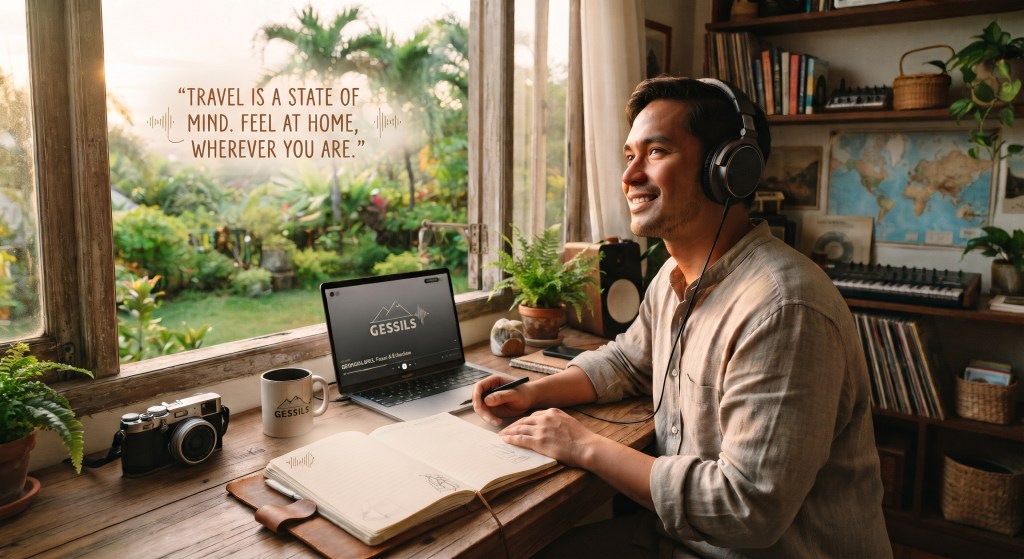
In this sense, the unlived trip is not a loss, but an internal sanctuary. It reminds us that our capacity for wonder does not depend entirely on a physical change of scenery. Sometimes, the deepest exploration happens when we stay completely still, letting our minds wander into the quiet spaces of introspection and longing.

Rootedness as a Virtue
Our reluctance or inability to leave can also be a testament to what we are protecting. Every time we choose not to go, we are often choosing to stay—to nurture a relationship, to care for a home, to tend to a creative project, or simply to give ourselves the gift of rest.
The roads we don’t take teach us about our anchors. They show us what matters enough to keep us rooted when the rest of the world is rushing to board the next flight. There is immense strength in recognizing that staying put is not stagnation; sometimes, it is the bravest and most grounding choice we can make.
Carrying the Horizon Within
Ultimately, the beauty of a journey not taken is that it stays entirely pure. Physical travels are messy—they involve rainstorms, missed connections, and tired feet. But the roads we imagine remain illuminated by a perpetual, golden afternoon light. They become a part of who we are, shaping our empathy, our art, and our quiet daydreams.
We do not always need to pack a bag to expand our world. The unlived adventures remind us that we carry infinite horizons inside us, waiting patiently in the quiet rooms of our hearts. You haven’t missed out; you have simply cultivated a different kind of landscape—one that blooms quietly, right where you are.

The Stay
The train ticket sits inside the drawer,
Unused, unpunched, a quiet plea
To walk the streets I mapped before,
The ones I never got to see.
The suitcase waits beside the stair,
With sweaters meant for mountain chill,
And maps of places waiting there,
While all my quiet rooms stand still.
Some roads are not made up of miles,
Or boarding passes in the light,
Instead, they live in quiet smiles,
And trains that leave alone at night.
So let the distant harbor wait,
And let the morning shadows break;
Some journeys live behind the gate
Of every road we didn’t take.





Leave a Reply