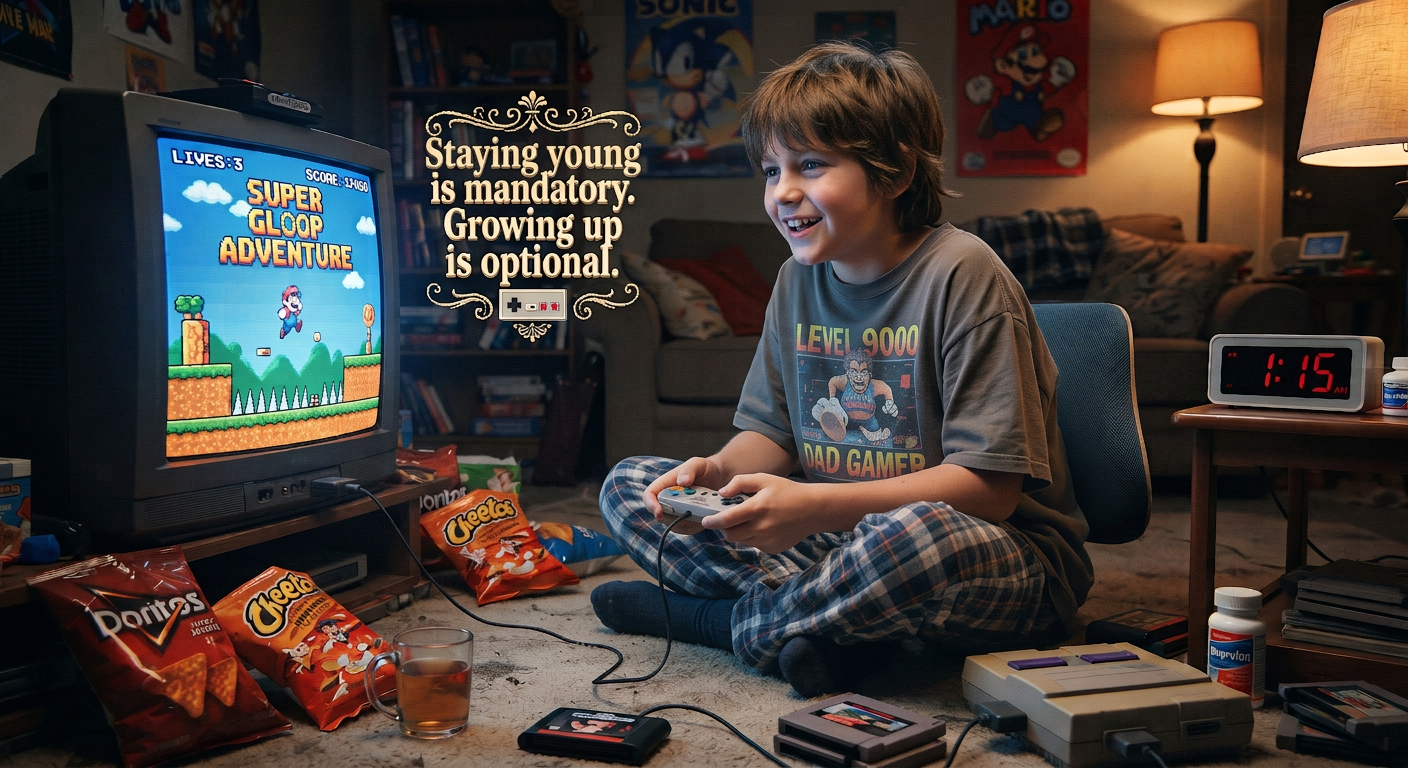

There is a special kind of comedy that happens when an adult tries to relive their glory days on a retro video game. In your head, you are still a fearless pixel-slaying hero. In reality, you are a walking sound effect of cracking knuckles and heavy sighs.
1. The Great Physical Betrayal
Back in the day, you could pretzel your limbs on a hard floor for twelve hours straight while eating neon cheese snacks, feeling totally fine. Today? You fire up a classic game, and within three minutes:
- Your right wrist makes a terrifying snap.
- You pause the game—not because the boss is tough—but because you need to adjust your lumbar pillow.
- You squint at the screen wondering how your childhood eyes ever read microscopic text without going blind.
2. The Physics of Leaning
Some scientific laws never change. When your on-screen character is trying to make a desperate jump across a bottomless pit, you must physically lean your entire upper body to the left and mash the buttons twice as hard. Does this help the character? Absolutely not. But your brain firmly believes that brute-force controller crushing translates directly into aerodynamic lift.

3. The Midnight Rebellion
Playing video games past midnight used to feel like a brave act of teenage defiance against your parents. Now, you sit in the dark sweating over a save file, rebelling against… your own sensible bedtime. The thrill is identical, except the consequence isn’t a stern lecture—it’s staring at the ceiling at 3:00 AM, bargaining with the universe that three hours of sleep will be totally fine.
Growing older is mandatory. Growing up? Completely optional. As long as there are classic levels to beat, the kid on the living room floor is still wide awake, screaming at the screen.





Leave a Reply