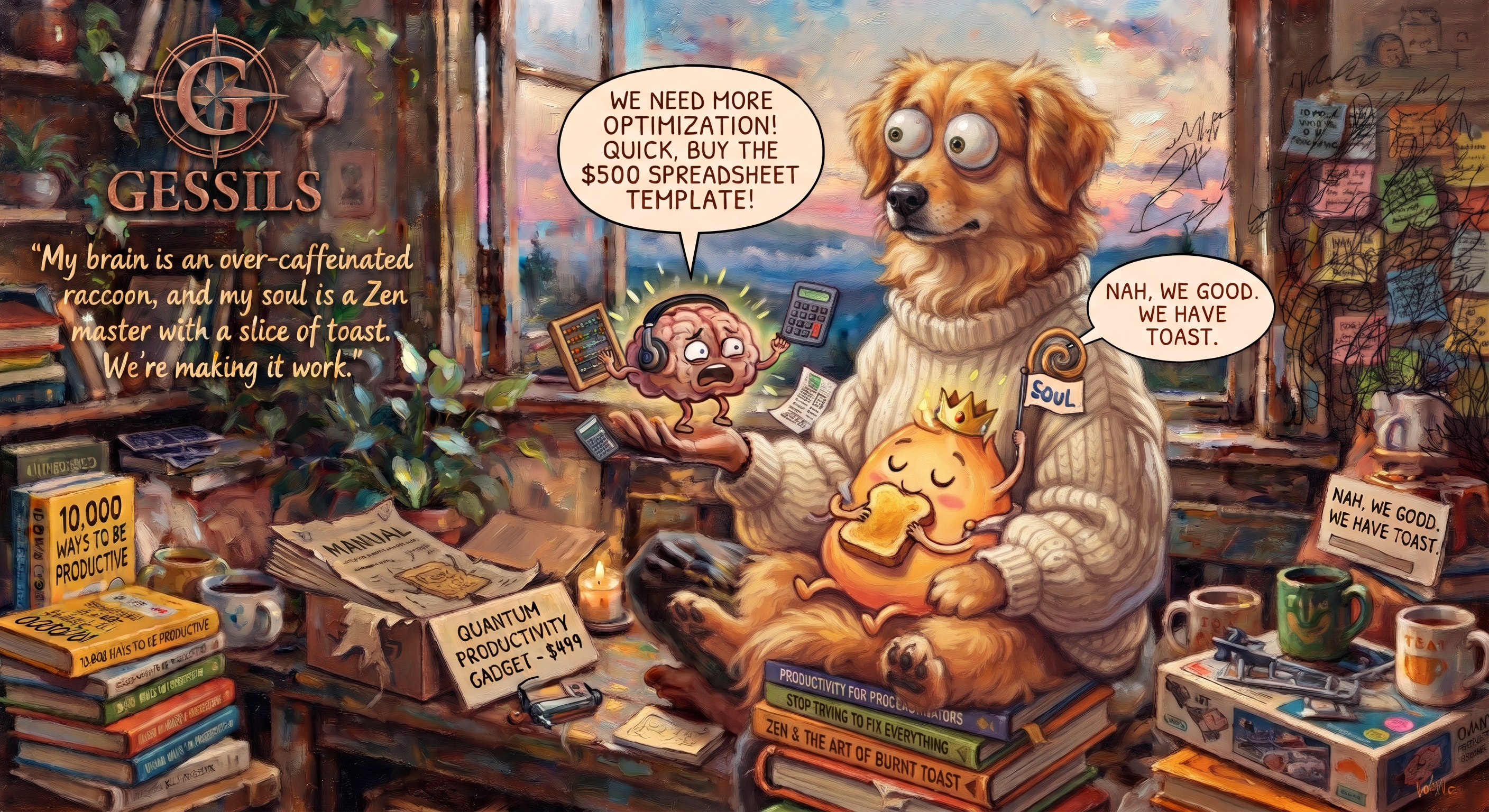

Let’s be honest: being a dog in a human house is exhausting.
You’re staring out the window at 2:00 PM, experiencing a very specific, highly dramatic civil war inside your furry skull.
Your brain is screaming: “WE NEED TO BARK AT THAT DELIVERY DRIVER! If we don’t defend the perimeter right now, the entire living room is going to collapse into chaos!”
Meanwhile, your soul (located somewhere near your belly rubs) is lying on the sofa cushion, calmly thinking: “My human, we already have three squeaky toys, a full bowl of kibble, and a patch of sun on the rug. Chill.”
Why Is This Happening?
Why does our brain act like an over-caffeinated squirrel guarding a stash of acorns, while our soul is basically a tiny Zen master?
It’s simple instinct:
- The Brain: Evolved over thousands of years to alert the pack to danger and track every crumb. It tells you that you are perpetually lacking—like an unfinished doghouse missing a roof.
- The Soul: Lives completely outside of treat-dispensing hours. It remembers that you were already a good dog before you ever chased a ball or barked at the vacuum cleaner.

Dropping Anchor (Before We Bark at Another Shadow)
When you feel that hilarious, exhausting tug-of-war between what your head demands and what your heart actually knows, stop.
Step away from the window. Unclench your paws. Let the world’s noise quiet down.
Surrender the frantic search for external gold—whether it’s the ultimate chew toy or the approval of the mail carrier.
Repeat after me: You are not an unfinished puppy. You are not a beta version of a dog waiting for a software update. In the grand scheme of the living room, you are already complete.
The gold was within your fluffy coat all along. (And no, it’s not under the couch cushions.)





Leave a Reply