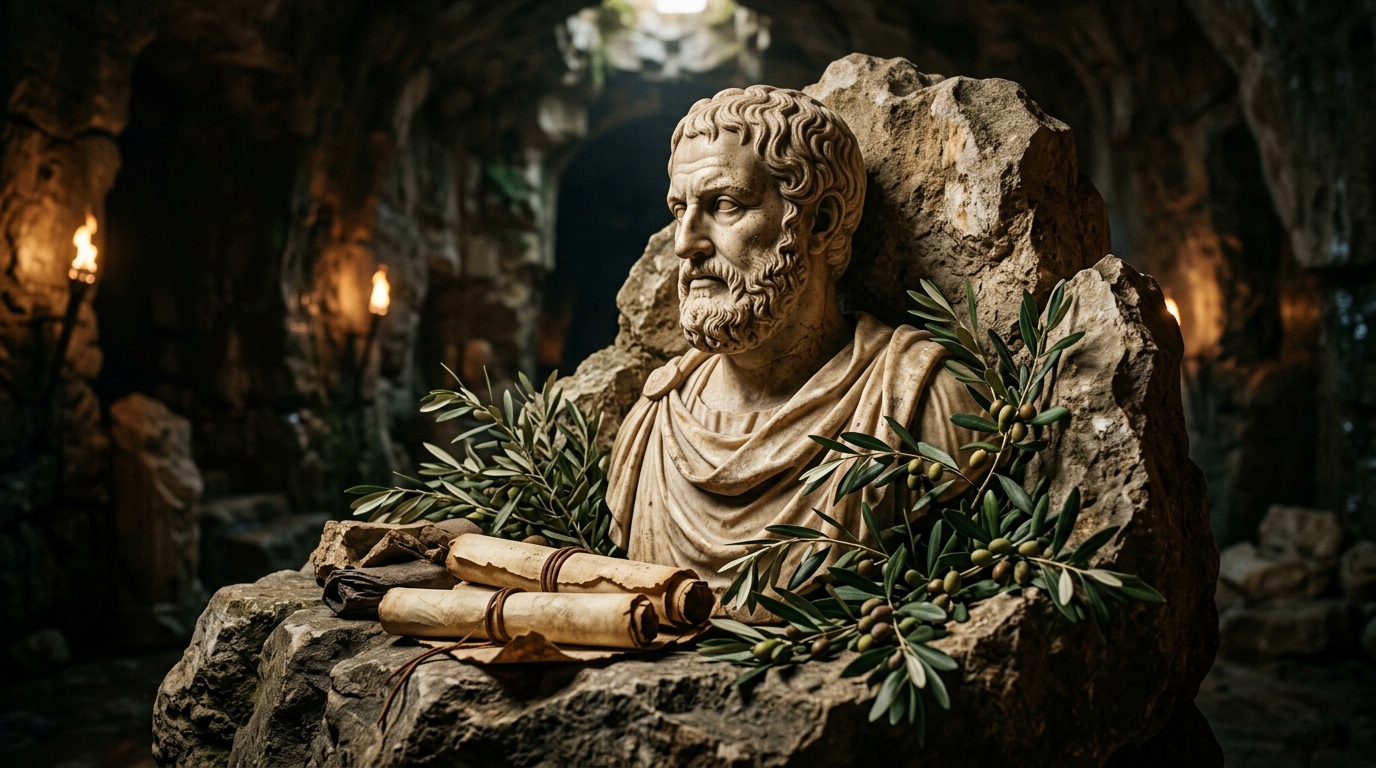

Throughout history, humanity has sought to understand the nature of the self, the universe, and the purpose of life. The Sages of Greece—philosophers like Socrates, Plato, Aristotle, and others—pondered these profound questions, offering insights that remain relevant even in our modern age of programming and digital influence. Applying their wisdom to the metaphor of programming, we can explore what we become when the “code” of life begins to run and when it finally concludes.
In the context of Greek philosophy, the start of programming can be likened to the awakening of the soul or the initial shaping of our character and knowledge. Socrates famously emphasized the importance of self-knowledge (“Know thyself”) and the pursuit of virtue as the foundation for a meaningful life. This early phase is akin to receiving the initial code—basic instructions about how to live, what to value, and how to seek truth.

Plato’s theory of Forms suggests that beneath the physical world lies a realm of perfect, unchanging ideas—an ultimate program that guides our understanding and aspirations. When we first begin to “run” this program, we are in the process of learning, internalizing societal and philosophical codes that shape our worldview. Our consciousness is like a blank canvas, awaiting the input of wisdom and moral guidance.
As we grow, the Greek sages would argue, we reach a critical point where we must examine and question the programming we’ve received. Socrates’ dialectical method encourages examining one’s beliefs, unmasking contradictions, and striving for authentic understanding. This process resembles debugging or rewriting the code—challenging inherited assumptions and seeking a more virtuous and true way of being.

Aristotle emphasized the development of virtue through deliberate practice and reasoned choice, suggesting that we are active participants in shaping our moral character. In this phase, we are “programming” ourselves—aligning our actions with higher principles and striving for excellence (arete). The goal is to become an ethical and rational being, fully aware of the code that guides our conduct.
When the program reaches its conclusion, Greek philosophy offers two perspectives. One is the realization of the highest human potential—living a life of virtue, wisdom, and harmony with the cosmos, as Socrates and Aristotle envisioned. In this sense, the “program” ends when the soul attains its true purpose, achieving eudaimonia (flourishing).

Alternatively, the end can also signify mortality—the final line of the human code. The Sages believed that understanding the impermanence of life and the soul’s immortality (in Plato’s view) allows us to transcend the physical limitations and remain aligned with the unchanging Forms. The true “end” is thus not death but the soul’s liberation and union with the eternal.
Drawing from the wisdom of the Greek Sages, we see ourselves as beings whose lives are akin to complex programs—initially shaped by external codes, then examined and rewritten through reason and virtue, and finally reaching a state of fulfillment or transcendence. Their teachings remind us that the essence of our existence lies in self-awareness, moral development, and the pursuit of higher truths—an ongoing process of programming and reprogramming that defines what we are at each stage of life.







Leave a Reply