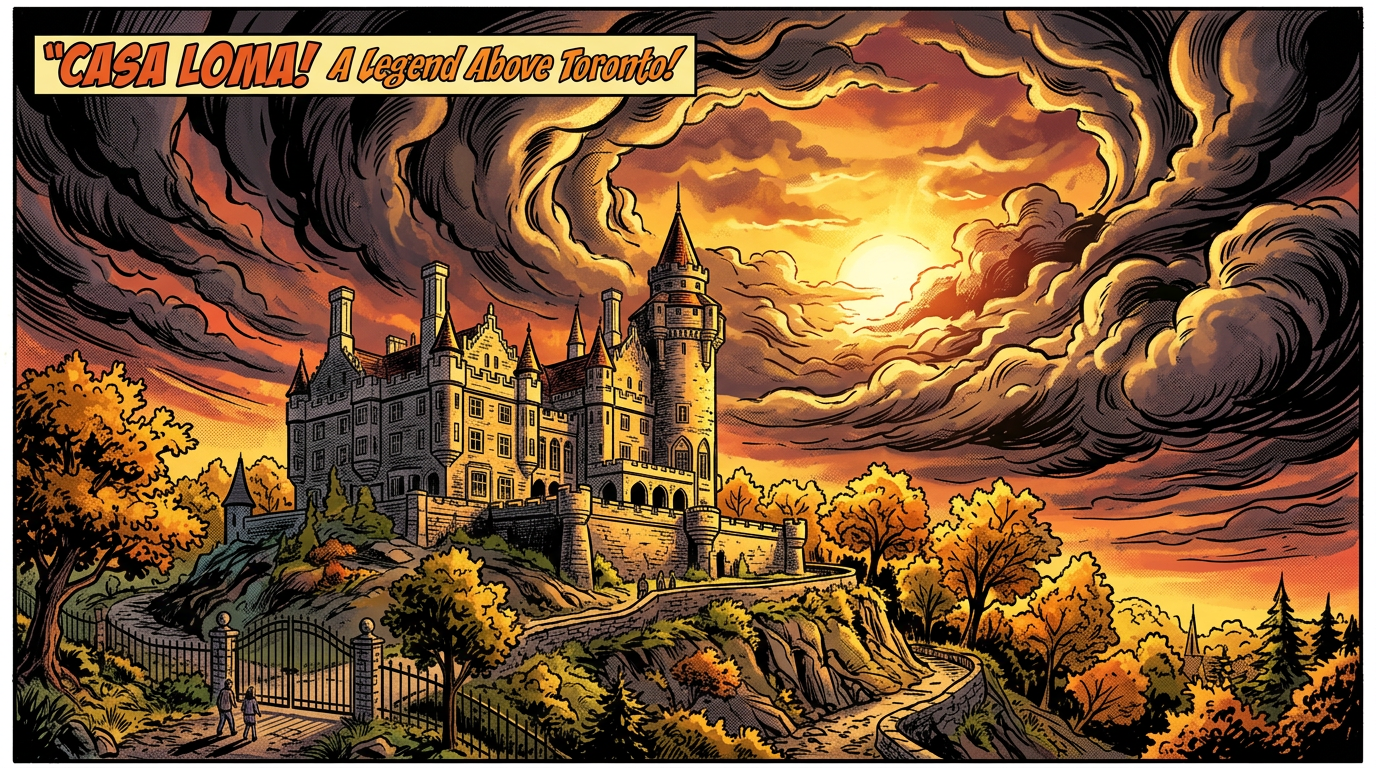

Casa Loma, located in Toronto, Ontario, is one of the most iconic landmarks in Canada. This majestic castle, with its towers and gardens, stands as a testament to early 20th-century architecture and the ambitious vision of its owner, Sir Henry Pellatt. The story of Casa Loma is not merely one of bricks and mortar; it is interwoven with the fabric of Toronto’s history and the dreams of a man who sought to create a piece of Europe in North America.
Origins and Construction
The construction of Casa Loma began in 1911, at a time when Toronto was experiencing significant growth and development. Sir Henry Pellatt, a wealthy Toronto businessman and financier, dreamt of building a castle that would reflect his status and wealth. Inspired by European architecture and the romanticism of the medieval era, Pellatt envisioned a home that would serve not just as a residence but as a symbol of his success.

Designed by architect E.J. Lennox, Casa Loma was completed in 1914 and cost approximately $3.5 million—an enormous sum at the time. The castle features 98 rooms, secret passages, and an extensive collection of art and furnishings from Europe. Its Gothic Revival style, characterized by pointed arches, intricate stonework, and grand staircases, draws visitors into a world reminiscent of stories from the past.
Life at Casa Loma
For a brief period, Casa Loma was a bustling home filled with grand parties and events. Pellatt and his wife, Mary, entertained guests from high society, showcasing their wealth and the castle’s grandeur. The estate also included beautifully landscaped gardens, a lawn for croquet, and a greenhouse, reflecting the Pellatts’ love for nature and aesthetics.
However, the Pellatts’ enjoyment of Casa Loma was short-lived. Financial difficulties arose due to poor investment decisions and the onset of World War I. By 1924, the Pellatts were forced to forfeit the property, and Casa Loma was repurposed into a hotel and a tourist attraction. The castle underwent various changes in ownership and function, though its architectural beauty continued to attract visitors.

Preservation and Modern Era
In 1937, Casa Loma was acquired by the City of Toronto, which aimed to preserve the historic structure for future generations. Over the decades, extensive restoration efforts have been made to maintain its integrity and beauty. Today, Casa Loma operates as a museum and event venue, welcoming thousands of visitors each year who are eager to explore its rich history.
The castle’s interior showcases period furniture and artifacts, giving visitors a glimpse into early 20th-century life in Toronto. The sprawling gardens provide a tranquil escape, while themed events and activities throughout the year ensure that Casa Loma remains a vibrant part of the community.
Conclusion
Casa Loma is more than just a historic building; it embodies the ambitions and dreams of a bygone era. Sir Henry Pellatt’s vision of grandeur has transformed into a beloved landmark that draws visitors from near and far. It stands as a symbol of Toronto’s rich history, architectural prowess, and the enduring spirit of those who have called it home. As we continue to cherish and preserve Casa Loma, we also honor the stories and legacy that it represents in the heart of Canada’s largest city.





Leave a Reply