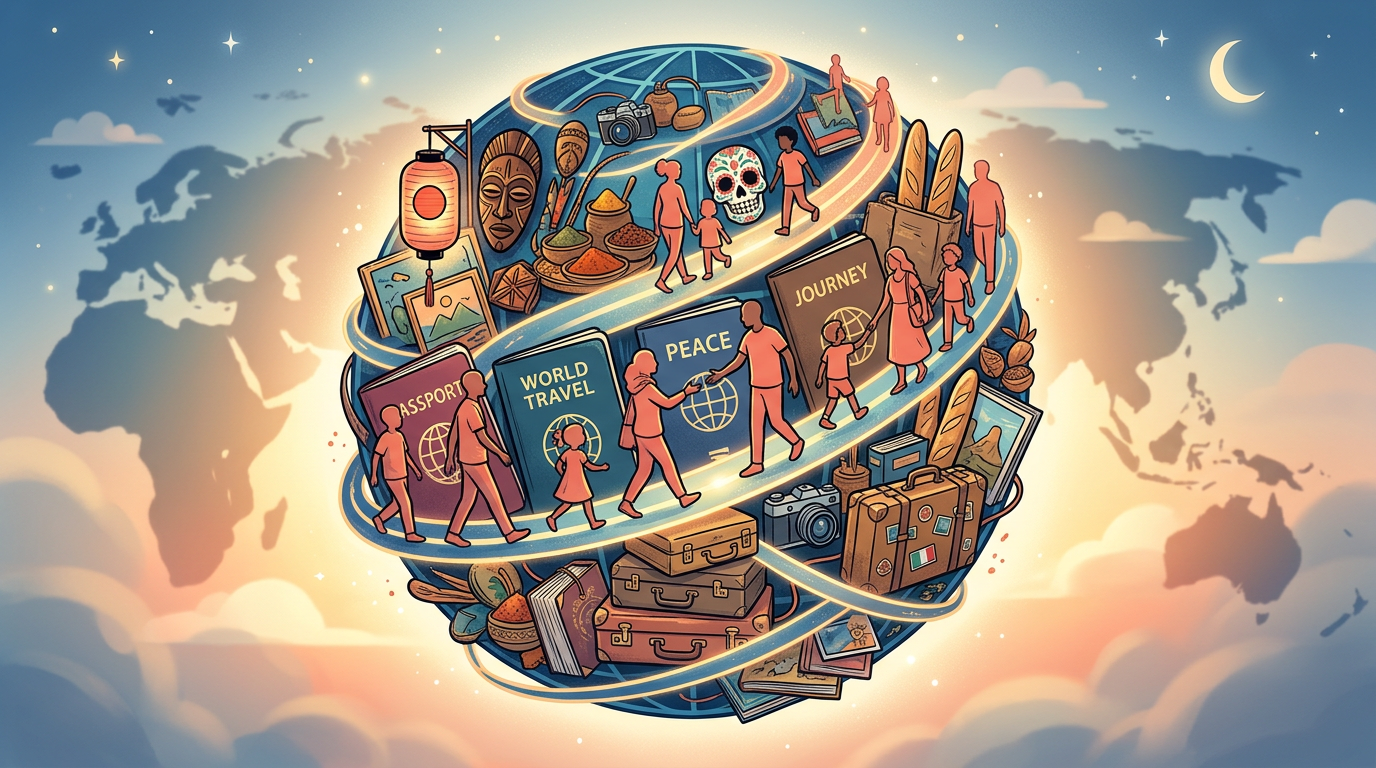
Bridges Across Borders: How Tourism Acts as an Unsung Tool for Peace
When we think of international peace, our minds immediately go to the high-stakes theater of global diplomacy: leaders signing treaties in grand halls, UN delegates negotiating ceasefires, or the annual announcement of the Nobel Peace Prize. Yet, true and lasting peace rarely trickles down exclusively from the top. Often, it is built from the ground up by the simple, profound act of crossing a border. Tourism, long dismissed as mere recreation or economic consumerism, is quietly one of the most powerful tools for global diplomacy and intercultural understanding we possess.

The Power of Shared Humanity
At its core, traditional diplomacy relies on governments talking to governments. Tourism, however, facilitates conversations between people. When an individual steps out of their familiar environment and immerses themselves in a foreign culture, the abstract “other” transforms into a neighbor.
Media narratives and political rhetoric often reduce nations to monolithic adversaries, painting foreign populations through the lens of fear or stereotypes. Travel acts as an organic antidote to this polarization. Sharing a meal in a bustling market, navigating a foreign transit system with the help of a stranger, or marveling at a historic landmark allows travelers to witness the shared hopes, daily struggles, and fundamental dignity of everyday people. Empathy is the bedrock of peace, and travel is one of its most reliable catalysts.
Economic Interdependence as a Deterrent to Conflict
Beyond cultural exchange, the global tourism industry serves as a powerful economic anchor for international stability. Regions emerging from political isolation or economic hardship frequently leverage tourism to rebuild infrastructure, create jobs, and foster sustainable growth.
When nations are bound together by shared economic prosperity and the flow of international visitors, the financial and social disincentive for conflict multiplies. Tourism transforms former conflict zones and isolated frontiers into shared global heritage sites. By giving nations a mutual stake in global mobility and safety, travel creates a practical, economic framework where peace is vastly more profitable than war.

The Paradox and Promise of Global Mobility
Of course, tourism is not a utopian cure-all. When mismanaged, overtourism can strain local resources, and state-sponsored travel in oppressive regimes can risk whitewashing political injustices. Furthermore, freedom of movement is not distributed equally; passport power and visa restrictions often mirror global inequalities.
Yet, these challenges only highlight how deeply valuable mobility truly is. When we advocate for open, ethical, and sustainable travel, we are advocating for a world more connected and less inclined toward division.
Conclusion
A tourist boarding a flight may not win a Nobel Peace Prize, and a vacation itinerary will never replace a formal peace treaty. However, tourism achieves something that politicians alone cannot: it stitches together the human fabric of our planet. By dismantling prejudice, fostering cross-cultural empathy, and building economic bridges, the traveler becomes an everyday ambassador for a more harmonious world.





Leave a Reply