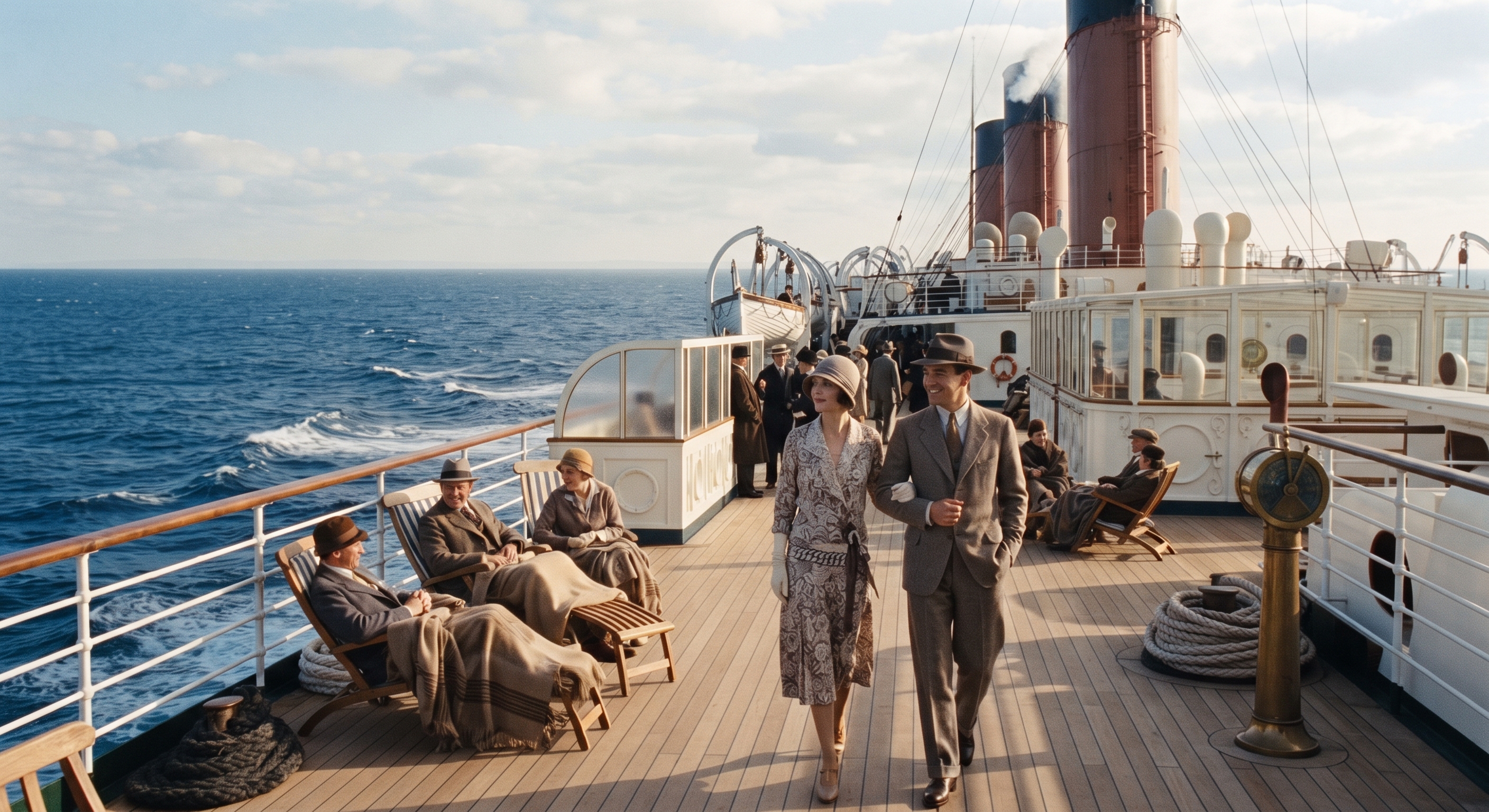

The Floating Palace: How Ocean Liners Redefined the Human Journey
Long before modern commercial aviation or luxury cruises shrank the globe, travelers boarded magnificent transatlantic ocean liners not merely to move from one coordinate to another, but to experience a floating world where time slowed down and the horizon stretched infinitely outward.
During the golden age of ocean travel in the early twentieth century, majestic vessels operated by lines like Cunard and White Star were far more than simple transportation. They were engineering marvels and floating palaces designed to conquer the vast, unpredictable Atlantic. Step inside, and you left the pressing worries of the mainland behind, replaced by the rhythmic hum of massive steam turbines and the elegance of a bygone era.

What made these voyages truly inspiring was how they transformed transit into a profound human ritual. Passengers donned formal evening wear for grand ballroom dances, shared five-course gourmet meals under crystal chandeliers, and found community across social divides in lounges that rivaled the finest hotels in London or New York. Amidst the cavernous solitude of the open sea, strangers became companions, sharing stories over morning tea while gazing at endless blue swells or finding solace in indoor swimming pools, gymnasiums, and libraries.
In our hyper-connected modern age, we value speed above all else. We board an aircraft, sleep through time zones, and arrive at our destination in hours, often trading the journey itself for ultimate efficiency. Yet, the history of the ocean liner reminds us of the magic inherent in the space between places. These magnificent ships taught us that travel is not just about reaching a destination on a map, but about the transformation that occurs within us while we are suspended between worlds. They stand as an enduring testament to human ingenuity and our eternal desire to bridge divides, turning the daunting expanse of the open ocean into a stage for grace, connection, and wonder.





Leave a Reply